
As per IS 8978:1992 + Amendment 1:1993
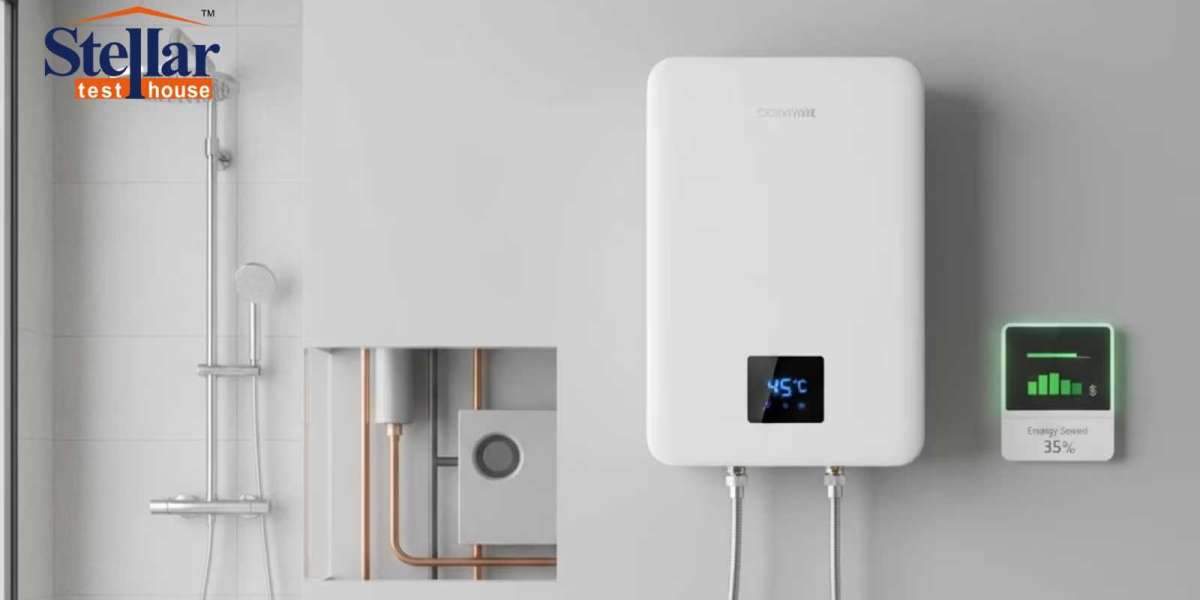
Electric instantaneous water heaters, commonly known as instant geysers, are widely used for quick and energy-efficient hot water supply in residential, commercial, and institutional applications. To ensure consistent performance, safety, and efficiency, these appliances must comply with IS 8978:1992 with Amendment 1:1993, the Indian Standard that specifies performance testing requirements for electric instantaneous water heaters.
Overview of IS 8978
IS 8978 is an Indian Standard issued by the Bureau of Indian Standards (BIS) that lays down the performance requirements and test methods for electric instantaneous water heaters used with potable water supplies. The 1993 amendment introduced clarifications and refinements in test conditions and evaluation criteria.
This standard focuses mainly on functional performance rather than constructional or electrical safety aspects.
Scope of the Standard
IS 8978 applies to:
Electric instantaneous (tankless) water heaters
Water heaters intended for domestic and similar applications
Appliances operating on AC power supply
Units designed for fixed installation
The standard does not cover storage water heaters or non-electric water heating systems.
Objective of Performance Testing
Performance testing as per IS 8978 aims to:
Verify the heating capability of the appliance
Assess water temperature rise under specified conditions
Evaluate efficiency and stability of operation
Ensure uniform and reliable hot water output
Key Performance Tests as per IS 8978
1. Rated Power Input Test
Verification of power consumption at rated voltage
Ensures the heater operates within permissible limits
2. Water Temperature Rise Test
Measurement of temperature increase between inlet and outlet water
Conducted at specified flow rate and supply voltage
Confirms the heater’s ability to deliver instant hot water
3. Heating Capacity Test
Evaluates the amount of water heated to the required temperature
Confirms performance under normal operating conditions
4. Efficiency Evaluation
Determines the ratio of useful heat output to electrical energy input
Ensures minimal energy loss during operation
5. Flow Rate Performance Test
Checks heater performance at declared flow rates
Ensures stable temperature without fluctuation
6. Repeatability and Stability Test
Confirms consistent performance during repeated operations
Ensures reliability in daily use
Test Conditions
Performance tests are conducted under controlled conditions, including:
Specified inlet water temperature
Rated supply voltage and frequency
Defined water pressure and flow rate
Steady-state operation of the heater
Importance of IS 8978 Compliance
Compliance with IS 8978 ensures:
Reliable and efficient heating performance
Consumer satisfaction and confidence
Conformity with product specifications
Acceptance in regulatory and quality assessment processes
Role of Testing Laboratories
Accredited testing laboratories conduct performance testing as per IS 8978 by:
Setting up controlled test conditions
Measuring electrical and thermal parameters
Issuing detailed test reports for manufacturers and regulators
These reports help manufacturers validate product performance and support certification or market acceptance.
Conclusion
Electric Instantaneous Water Heaters tested as per IS 8978:1992 + A1:1993 demonstrate consistent heating performance, efficiency, and operational reliability. Performance testing under this standard is essential to ensure quality, energy efficiency, and user satisfaction.