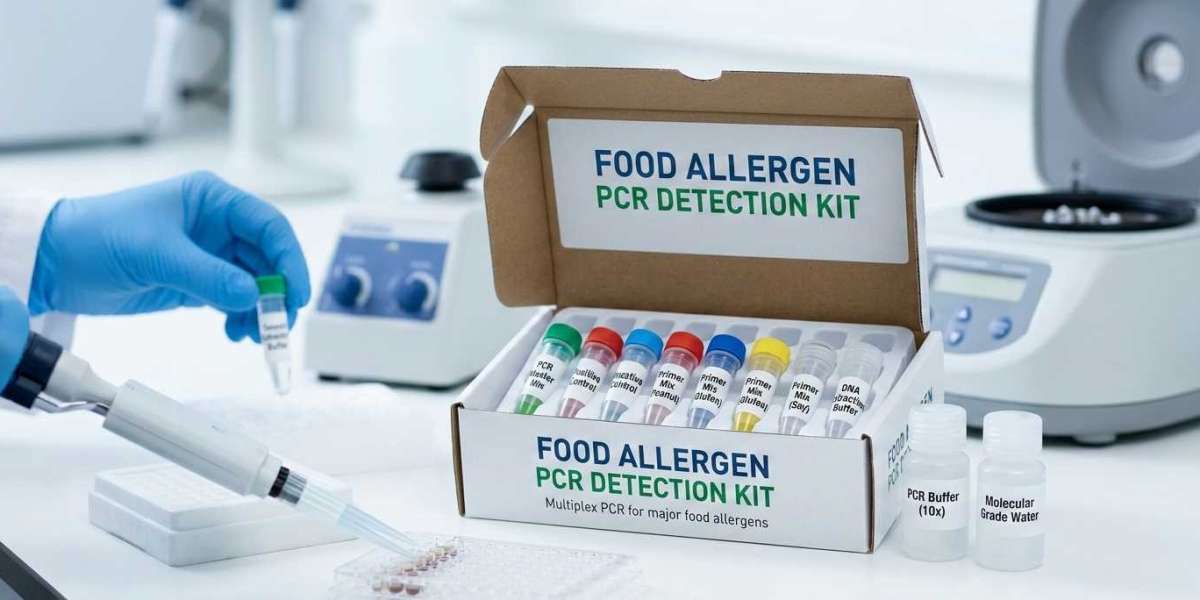

As food allergies continue to pose a significant health risk across North America, the demand for precise, rapid, and reliable allergen testing solutions is steadily growing. Food Allergen PCR Kits are leading the charge, offering an effective method for detecting food allergens with high specificity and sensitivity. This blog delves into the increasing importance of PCR-based testing kits in the food industry, the key trends shaping their growth, and what the future holds for this sector until 2031.
Request Sample Pages of this Research Study @ https://www.theinsightpartners.com/sample/TIPRE00029783
Food Allergen Polymerase Chain Reaction (PCR) kits are molecular diagnostic tools that identify DNA fragments specific to allergenic sources such as peanuts, soy, wheat, milk, eggs, tree nuts, and seafood. Unlike traditional methods, PCR technology offers high sensitivity and specificity, enabling accurate allergen detection even at trace levels.
Why Food Allergen PCR Testing Matters
Food allergies affect millions of people worldwide and can lead to severe health reactions if allergens are present in products without labeling. As regulatory agencies enhance food safety standards, manufacturers must adopt reliable testing technologies to avoid adverse outcomes like product recalls, consumer distrust, and legal liabilities. PCR kits thus play a pivotal role in preserving both public health and brand integrity.
Driving Trends Shaping the Market
Several key trends are fueling the adoption of Food Allergen PCR Kits:
- Increasing Regulatory Pressure
Governments and food safety authorities globally are tightening allergen monitoring requirements. This drives food processors and labs to integrate advanced PCR solutions to meet compliance and safety benchmarks.
- Growing Consumer Awareness
With more individuals diagnosed with food allergies and intolerances, there’s rising pressure on food producers to ensure allergen‑free products. This awareness increases demand for dependable screening methods.
- Technological Advancements
Innovations in PCR technology — including multiplex capabilities that detect multiple allergens simultaneously and faster turnaround times — enhance testing accuracy, speed, and laboratory efficiency.
- Broader Food Industry Adoption
From confectionery and dairy to infant and processed foods, diverse sectors are integrating PCR testing into quality control routines to safeguard product integrity and consumer trust.
Food Allergen PCR Kits Market Segmentation
Source
- Peanut and Soy
- Wheat
- Milk
- Egg
- Tree Nuts
- Seafood
Food Tested
- Bakery and Confectionery
- Infant Food
- Processed Food
- Dairy Products and Alternatives
- Seafood and Meat Products
- Other Foods
Market leaders and key company profiles
- Dicentra
- Eurofins Scientific SE
- Intertek Group plc
- Mérieux NutriSciences
- Microbac Laboratories Inc
- Neogen Corporation
- ALS Limited
- Romer Labs Diagnostic Gmbh
- SGS S.A.
- Millipore Sigma
- Thermo Fisher
- Perkinelmer
Opportunities for Industry Stakeholders
Manufacturers, testing laboratories, and service providers are poised to benefit from:
- Product diversification: Customized kits tailored to specific allergens or industry needs.
- Service solutions: Training, validation support, and ongoing maintenance services.
- Emerging markets: Rising food production and export standards in regions like Asia‑Pacific and Latin America present notable growth potential.
Challenges to Overcome
Despite strong momentum, the market faces hurdles such as standardization gaps between testing protocols, training needs for skilled personnel, and cost barriers for smaller food processors. Providers have opportunities to offer affordable solutions, streamlined support, and certification services.
Frequently Asked Questions (FAQs)
Q1. What industries use food allergen PCR kits?
Food manufacturers, quality assurance labs, food safety auditors, and regulatory bodies across sectors like bakery, dairy, seafood, and infant foods rely on PCR kits to verify allergen safety.
Q2. How do PCR kits differ from traditional allergen testing?
PCR kits detect DNA components of allergens, offering higher specificity and sensitivity compared to older immunoassay‑based methods.
Q3. Are PCR kits easy to use?
While high‑precision, PCR testing requires trained technicians and calibrated equipment, making training and validation essential components of effective implementation.
Q4. What trends will influence the market by 2031?
Key drivers include enhanced food safety regulations, demand for multi‑allergen testing, tech innovations, and expansion into emerging global markets.
Trending Related Reports:
- Food Safety Testing Kits Market Growth Opportunities and Forecast by 2031
- Home Baking Kits Market Report by Share, Growth and Size: 2031
- Self-Adherent Wraps Market Demand, Trends Forecast by 2034
- Scrub Suits Market Growth, Share Trends by 2034
About Us:
The Insight Partners is a one stop industry research provider of actionable intelligence. We help our clients in getting solutions to their research requirements through our syndicated and consulting research services. We specialize in industries such as Semiconductor and Electronics, Aerospace and Defense, Automotive and Transportation, Biotechnology, Healthcare IT, Manufacturing and Construction, Medical Device, Technology, Media and Telecommunications, Chemicals and Materials.
Also Available in : Korean German Japanese French Chinese Italian Spanish