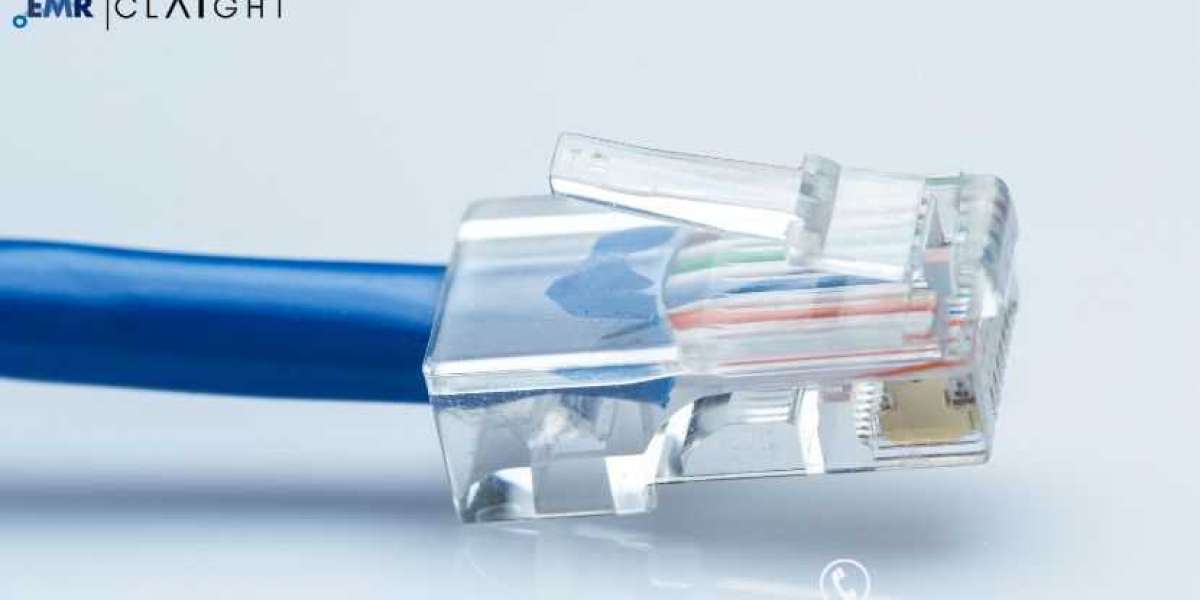

The global automotive Ethernet market size is poised for significant expansion, with the market valued at USD 2.64 billion in 2024. Projections indicate that this market will grow at a robust compound annual growth rate (CAGR) of 22.30% between 2025 and 2034, reaching an estimated value of USD 19.76 billion by 2034. As the automotive industry increasingly adopts advanced technologies such as autonomous driving, connected vehicles, and smart infotainment systems, Ethernet technology plays a crucial role in enabling high-speed, reliable communication within vehicles. In this article, we will explore the dynamics of the automotive Ethernet market, including its key drivers, challenges, trends, and opportunities that are shaping its future.
What is Automotive Ethernet?
Automotive Ethernet refers to a high-speed networking technology designed specifically for in-vehicle communication systems. It provides a reliable and cost-effective solution for transmitting data between various electronic components of modern vehicles, including infotainment systems, cameras, sensors, and advanced driver assistance systems (ADAS). Ethernet technology offers several advantages over traditional in-vehicle networks, including higher bandwidth, reduced cabling complexity, and scalability for future applications.
The growth of the automotive Ethernet market is closely linked to the increasing integration of electronic systems within vehicles. With the rise of connected and autonomous vehicles, the demand for faster and more efficient data communication networks has grown substantially. Automotive Ethernet is seen as the backbone for these innovations, offering a robust and future-proof solution to support the next generation of automotive technologies.
Key Drivers of Growth in the Automotive Ethernet Market
- Rise of Autonomous Vehicles
One of the most significant drivers of growth in the automotive Ethernet market is the increasing development and deployment of autonomous vehicles. Autonomous driving technologies rely heavily on high-performance sensors, cameras, and radar systems to provide real-time data and ensure safe operation. Ethernet, with its ability to handle high-bandwidth data streams, is essential for transmitting data from these devices to the vehicle's central processing unit. The need for fast and reliable communication networks will only increase as autonomous vehicles become more prevalent, propelling the demand for automotive Ethernet solutions.
- Growth in Connected Vehicles
As vehicles become more connected through the Internet of Things (IoT), the need for robust communication systems has never been greater. Automotive Ethernet supports the connectivity required for a wide range of in-vehicle applications, such as navigation, entertainment, and telematics. Additionally, as consumers demand seamless experiences with their vehicles, automotive Ethernet offers the bandwidth necessary to deliver high-quality multimedia streaming, real-time diagnostics, and vehicle-to-everything (V2X) communication.
The rise in demand for advanced infotainment systems, vehicle-to-cloud communication, and over-the-air (OTA) updates has further fueled the need for high-speed data transmission, positioning automotive Ethernet as the go-to solution for future-proofing connected vehicles.
- Increased Adoption of Advanced Driver Assistance Systems (ADAS)
ADAS technologies, such as automatic emergency braking, lane-keeping assist, and adaptive cruise control, are becoming standard features in many vehicles. These systems rely on data from various sensors and cameras that must be transmitted rapidly and reliably for timely decision-making. Automotive Ethernet's ability to support high-speed data transfer makes it an ideal choice for ADAS applications. As the adoption of ADAS increases, the demand for Ethernet-based solutions in vehicles is expected to rise sharply, driving market growth.
- Cost-Efficiency and Simplified Wiring
Automotive Ethernet provides a significant advantage over traditional in-vehicle communication technologies, such as Controller Area Network (CAN) and FlexRay, due to its ability to reduce the complexity of wiring systems. Ethernet networks use a single, unified cable infrastructure, simplifying vehicle design and reducing costs associated with cabling and maintenance. As automakers strive to make vehicles lighter and more cost-efficient, automotive Ethernet's streamlined architecture offers a compelling solution.
- Government Regulations and Safety Standards
Government regulations, particularly in regions like Europe and North America, are increasingly mandating the inclusion of safety and connectivity features in vehicles. For instance, European Union regulations now require all new cars to be equipped with advanced safety technologies like automatic emergency braking and lane-keeping assist. These regulations create a growing demand for the components that enable such systems, including high-speed networking solutions like automotive Ethernet.
Challenges Facing the Automotive Ethernet Market
- Compatibility and Standardization Issues
While automotive Ethernet offers significant advantages, one of the key challenges facing the market is the lack of universal standards for Ethernet implementation in vehicles. Different automakers and suppliers may use varying Ethernet protocols, which can create compatibility issues between different systems and components. Achieving greater standardization in Ethernet technology across the automotive industry will be critical for the widespread adoption of automotive Ethernet.
- Integration with Legacy Systems
Many vehicles on the road today still rely on traditional in-vehicle networking systems like CAN, LIN, and FlexRay. Integrating these legacy systems with newer Ethernet-based solutions can be complex and costly. Automakers will need to ensure that new Ethernet technologies can seamlessly coexist with existing systems, without requiring costly overhauls or causing compatibility issues. This challenge may slow down the adoption of automotive Ethernet in the short term, particularly for automakers with large fleets of vehicles.
- Security Concerns
As vehicles become more connected, cybersecurity becomes a critical concern. Automotive Ethernet networks, while offering high-speed data transmission, are also vulnerable to cyberattacks. Hackers could potentially gain access to critical vehicle systems, such as braking, steering, or communication with external devices, posing significant safety risks. Automakers and technology providers must implement robust security protocols to protect Ethernet networks from potential breaches and ensure the safety of drivers and passengers.
Emerging Trends in the Automotive Ethernet Market
- Integration of 5G and V2X Communication
The integration of 5G technology with automotive Ethernet is set to revolutionize the way vehicles communicate with each other and with infrastructure. Vehicle-to-everything (V2X) communication, enabled by 5G and Ethernet, will allow vehicles to exchange real-time data with traffic lights, road signs, and other vehicles, significantly enhancing safety and traffic management. This trend is expected to play a major role in shaping the future of connected and autonomous vehicles.
- Expansion of Ethernet for Advanced Infotainment Systems
Infotainment systems in vehicles are becoming increasingly sophisticated, with larger touchscreens, more advanced navigation tools, and support for streaming services like Netflix and Spotify. Automotive Ethernet provides the necessary bandwidth to support these high-demand applications. As infotainment systems continue to evolve, the demand for Ethernet infrastructure to handle these systems' data-intensive requirements will increase.
- Adoption of Ethernet in Electric Vehicles (EVs)
The shift towards electric vehicles (EVs) is another important trend influencing the automotive Ethernet market. EVs require more advanced in-vehicle electronics and sensors to monitor and control various systems, including battery management, powertrain control, and regenerative braking. Ethernet will play a critical role in ensuring high-speed data transfer between these systems, supporting the growth of the EV market and further driving the adoption of automotive Ethernet technology.
Market Segmentation
The automotive Ethernet market can be segmented based on the following criteria:
- By Vehicle Type: Passenger vehicles, commercial vehicles, electric vehicles (EVs).
- By Application: Advanced driver assistance systems (ADAS), infotainment systems, powertrain, and safety systems.
- By Region: North America, Europe, Asia Pacific, Latin America, Middle East Africa.